Why Small CNC Batches Cost More per Part: Setup, Inspection and Repeats
Understand small-batch CNC costs: setup allocation, inspection and repeat orders. Compare batch sizes and delivery releases with a practical RFQ checklist.
Written by Jingchuan
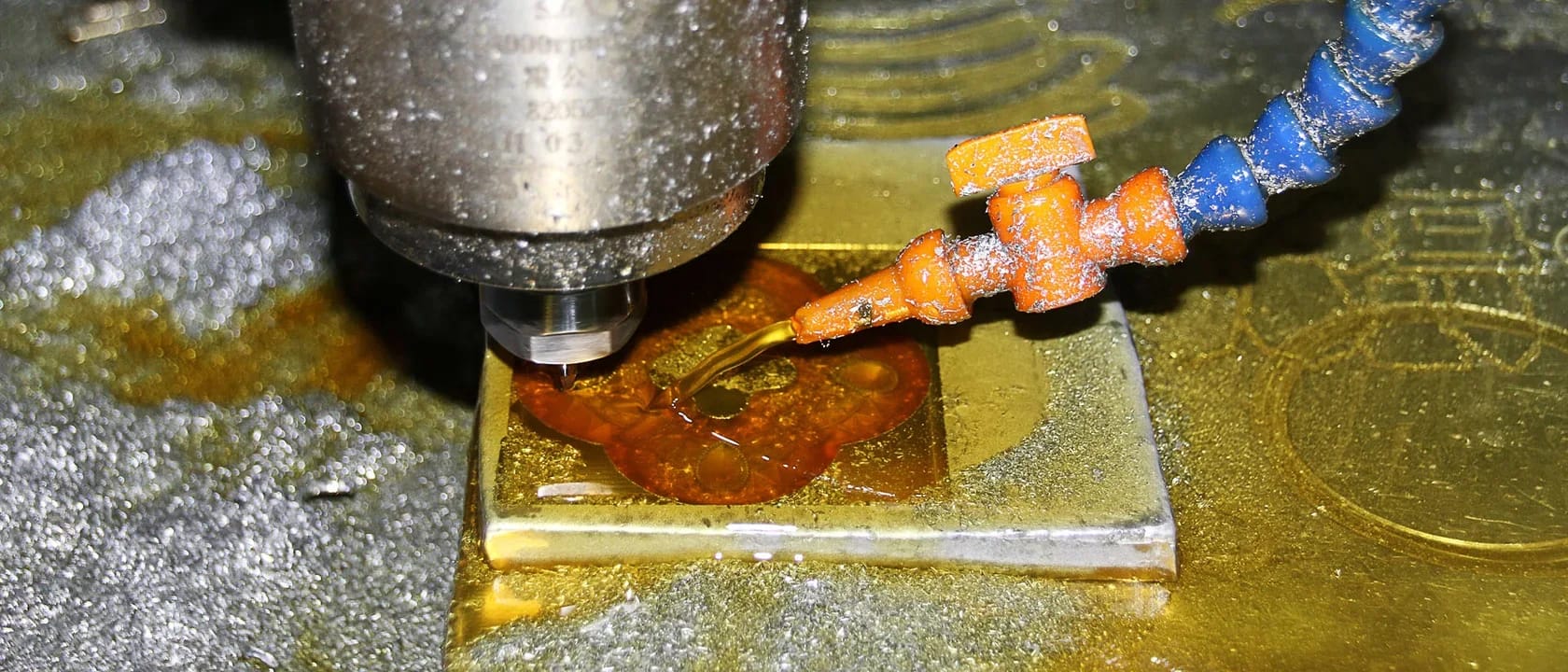
Cover photo: CNC milling tool and coolant above a metal workpiece. External illustrative photograph by Impressionmanufacturer, Wikimedia Commons source, CC BY-SA 4.0. Cropped, resized and converted to WebP; this adapted image retains the same license. Neither photograph in this article depicts a verified Jingchuan facility or customer project.
Compare the order, not only the unit price
Ten parts and fifty parts can share the same drawing but require different purchasing decisions. A useful small batch CNC machining cost comparison separates work needed to launch a batch from work repeated on every part. It also distinguishes a single production run from several deliveries made months apart. A lower unit price is not automatically the lower-cost choice if the extra parts may become obsolete.
For small-batch machining, ask suppliers to quote the quantity you need now and a realistic alternative quantity against the same revision, material condition, finish and acceptance requirements. Keep freight, taxes and other exclusions visible. The aim is to understand what changes between offers, not to assume a universal discount curve.
What a setup charge can contain
Renishaw describes process setting as establishing the relationship between machine, workpiece and tools before cutting, including work coordinates and tool offsets. That helps explain why preparation can exist even for a single part. The method and equipment used must be confirmed with the supplier.
Ask which activities are included: drawing review, programming, workholding preparation, tool loading, setting offsets and checking the initial result. These are discussion categories, not a claim that every workshop bills each separately. A saved program may be reusable, while mounting and checking a new batch may still take work.
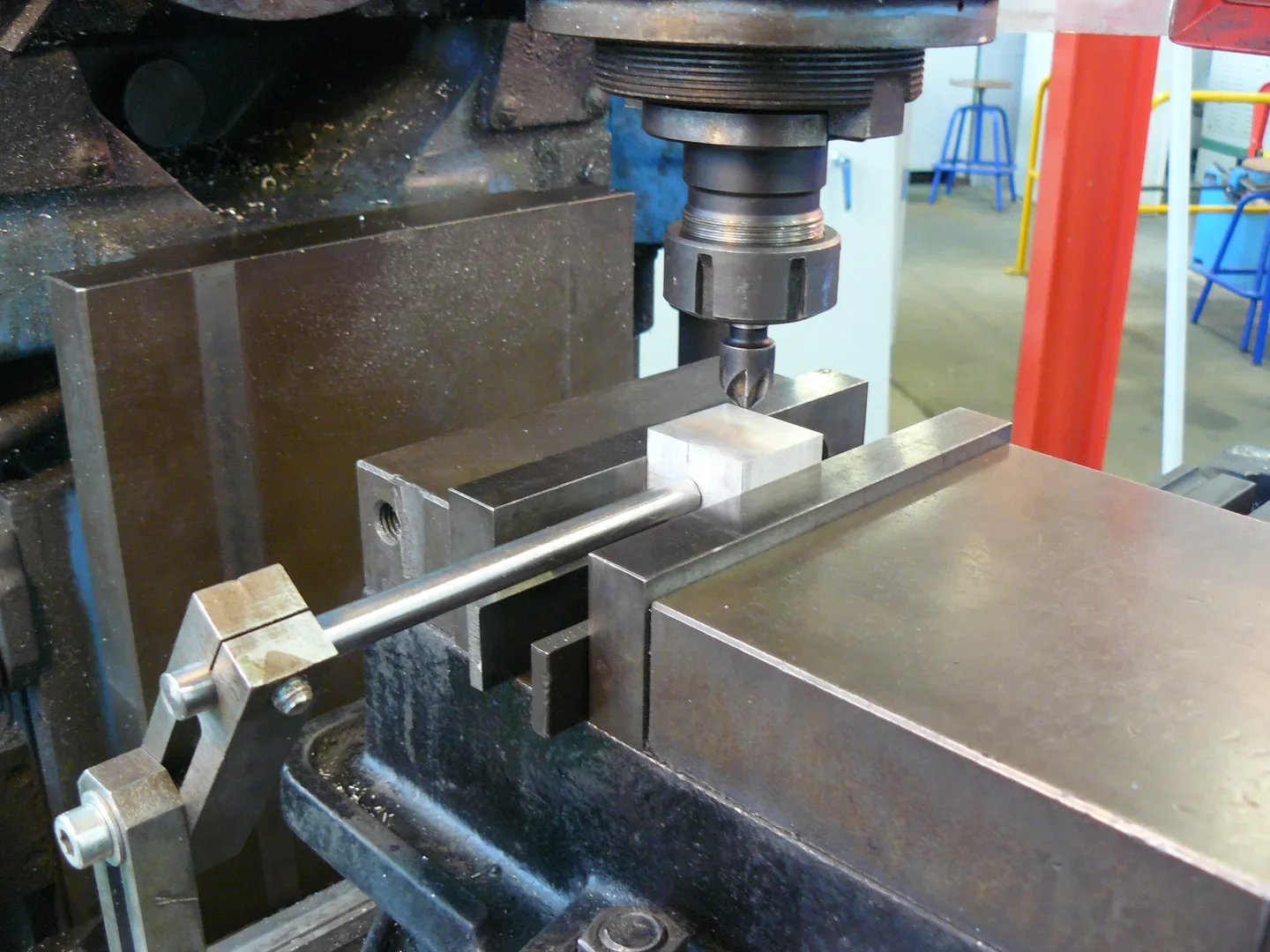
Workholding example: a vise locates and holds the workpiece, with a stop beside it. Photograph by Cdang, Wikimedia Commons source and public-domain declaration. Resized and converted to WebP. This is an illustrative milling setup; it does not establish the process, machine type or equipment used for your order.
A simple setup-allocation calculation
Let S be an agreed preparation amount for one batch, Q its accepted quantity and V an assumed unchanged amount per part for the remaining scope. The simplified estimate is V + S/Q. This is an explanatory model, not a quotation or an accounting standard. It assumes the same process, one setup allocation, unchanged per-part scope and no additional material, finishing, inspection or delivery minimums.
| Accepted parts Q | Setup allocated to each part | What this tells you |
|---|---|---|
| 10 | S/10 = 0.10S | Each part carries one tenth of the batch preparation amount. |
| 25 | S/25 = 0.04S | The same preparation is spread over more parts. |
| 50 | S/50 = 0.02S | Setup allocation per part is one fifth of the 10-part case. |
The change from 0.10S to 0.02S is an 80% reduction in the setup allocation only. It is not an 80% reduction in the finished-part price. Actual cycle time, material yield, tooling and purchase minimums can change with quantity. Sandvik Coromant's machining-economy explanation discusses cutting time and tooling choices as additional production-cost drivers; it does not supply a price for this example.
Fifty pieces now is not five releases of ten
If the same setup amount S genuinely applies to each run, one run of fifty allocates one S across the order, while five independent runs of ten allocate five S. That conditional calculation does not prove that either schedule is commercially preferable. Reusable fixtures, retained programs, capacity, storage, cash tied up in inventory and revision risk can change the decision.
Request two explicitly different scenarios: manufacture all parts together and ship in agreed releases; or manufacture each release separately. Ask who owns and stores finished stock, what quantity is committed, and how a drawing change affects unshipped parts. For recurring demand, the low-volume production page is a useful starting point for describing the release pattern.
Make inspection scope comparable
“Inspection included” leaves too much unstated. A first-piece check, checks during production and a final dimensional report can have different scopes. Do not assume that a report for one piece means every dimension on every piece was measured. Agree the sampling or full-inspection requirement, reporting and acceptance criteria before comparing prices.
| Quote item | Question to ask before ordering |
|---|---|
| Initial setup and program | What is charged once, and what is charged for each production run? |
| Workholding or special tools | Who owns them, how long are they retained, and what can be reused? |
| Inspection | Which features, how many parts, at which stage, and what report is delivered? |
| Quantity basis | Is the price for accepted delivered parts, and how are shortfalls handled? |
| Finish and delivery | Are minimum charges, packaging, freight and split shipments included? |
| Repeat order | Which assumptions must remain unchanged for the repeat price to apply? |
Turn the next RFQ into a useful comparison
State the immediate quantity, expected repeat quantity and release schedule separately. Attach one controlled drawing revision and identify material, finish, critical characteristics and required records. Our CNC RFQ checklist helps assemble that package. Label forecasts as forecasts so they are not mistaken for committed purchases.
For a repeat, ask the supplier to confirm the revision, retained program and fixture, fresh setup requirements and quote validity. Do not assume a previous price or inspection agreement remains valid after changes. Compare the total cost for the parts you can actually use, with the same acceptance and delivery scope.
Request a machining quote with your files and quantity scenarios. Ask for the batch preparation assumptions, recurring charges and inspection scope to be stated in the response; the worked allocation above is a comparison aid, not a Jingchuan price or production promise.