6061, 6082 or 7075 Aluminum: What to Specify in a Machining RFQ
Specify alloy, temper, stock form and material records for 6061, 6082 or 7075 CNC parts. Includes an RFQ checklist and a material-substitution review.
Written by Jingchuan
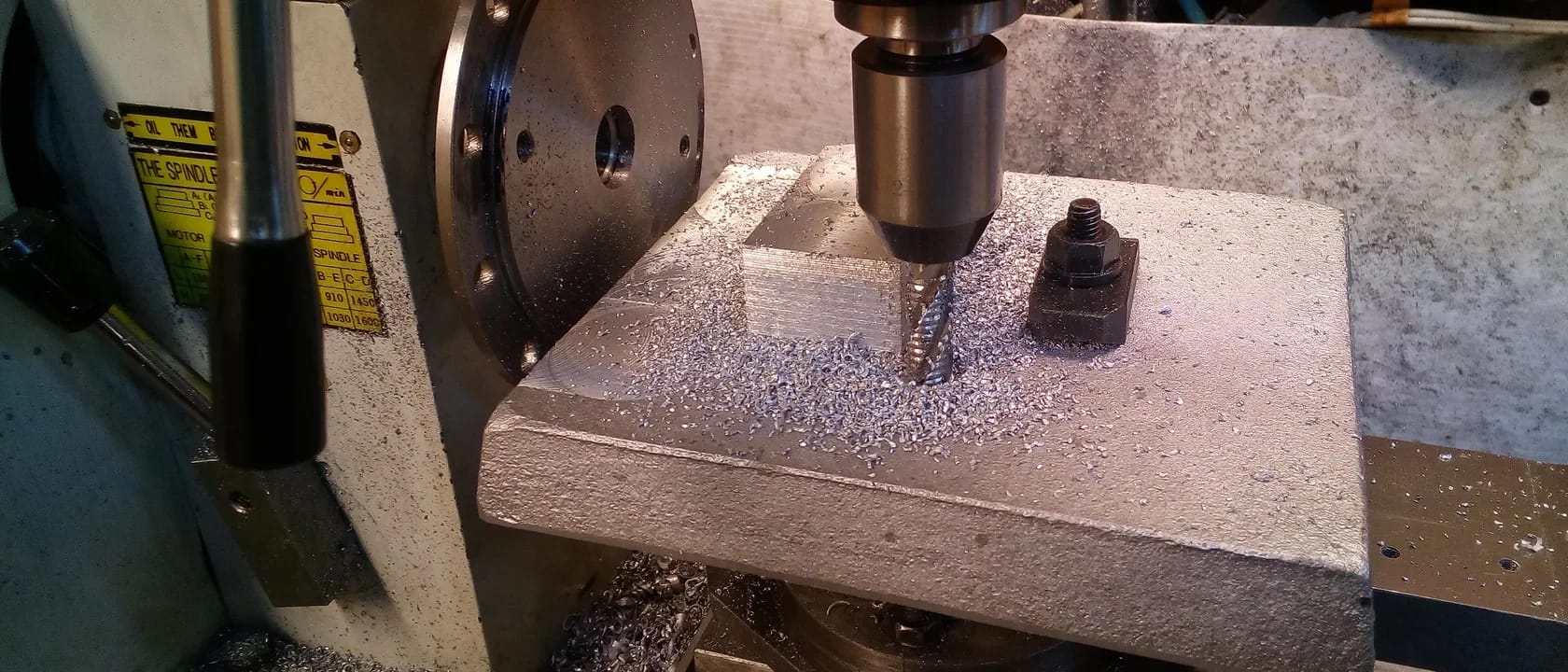
Cover: roughing an aluminum workpiece. David English, Wikimedia Commons, CC BY-SA 4.0. Cropped, resized and converted to WebP; the adapted image retains this license. Both photos are external illustrations, not verified Jingchuan facilities or customer projects.
Start with a complete material designation
An RFQ that says “aluminum, 6061 or equivalent” leaves an important decision unresolved. Which alternatives can the designer accept, in what condition, and with what evidence? For 6061, 6082 and 7075 CNC machining, ask for an offer against a defined material requirement before comparing alternatives on price or availability.
Separate the alloy designation, temper, product form, applicable product standard and document requirements. A supplier should be able to repeat those fields back in the quotation. Our aluminum machining page is a starting point for a process discussion; the released drawing and agreed order requirements must define the material for the actual part.
Three alloys, three useful questions
These source examples describe particular material products. They are not a universal ranking of finished parts or permission to substitute one alloy for another.
| Alloy under discussion | Primary-source context | Question to resolve in the RFQ |
|---|---|---|
| 6061 | Hydro describes a heat-treatable magnesium-silicon alloy for extruded profiles. | Does the proposed stock match the specified temper and product form? |
| 6082 | Hydro's extrusion bulletin describes similarity to 6061, not equivalence. | If offered instead of 6061, who approves the deviation and on what evidence? |
| 7075 | GLEICH lists high-strength T651 rolled plate with thickness-dependent and directional properties. | Which data apply to the actual stock thickness and required test direction? |
Do not attach an extruded-profile datasheet to a plate order and assume every value transfers. Likewise, a headline tensile-strength value does not answer a drawing requirement for yield strength, elongation or another specified property. Have the supplier identify the relevant document and the applicable row, including whether a value is a guaranteed minimum or merely typical.
Preserve the temper and product form
Keep the complete approved suffix, such as T6, T651 or T6511, wherever it is specified. Do not silently shorten the order to “T6” or “aluminum bar.” A change in stock designation needs to be visible even when the four-digit alloy number stays the same. Confirm whether the supplier is offering plate, extruded bar or another product before accepting the quotation.
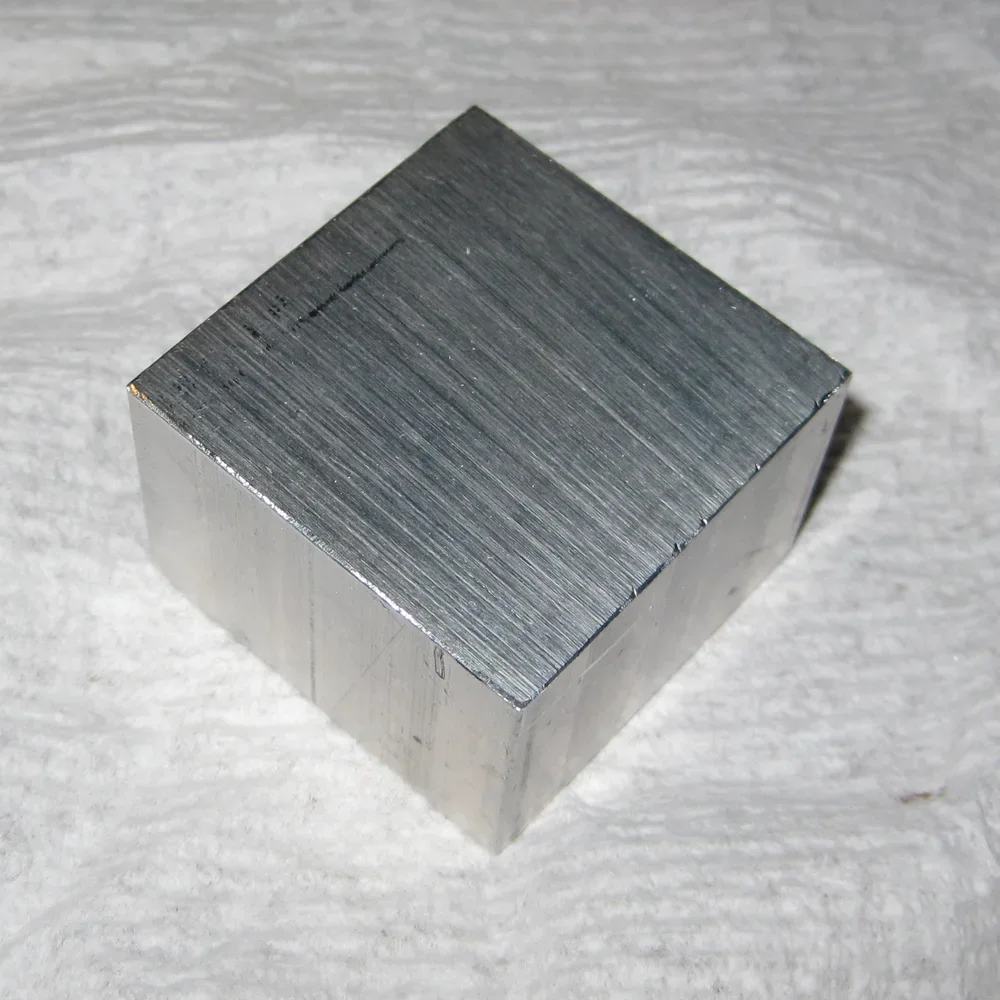
Material example: the source identifies this block as 6061; its temper is not stated. Robert.Baruch, Wikimedia Commons, CC BY-SA 3.0. Cropped, resized and converted to WebP; the adapted image retains this license. A photo cannot establish the ordered temper or replace material documentation.
If the design is still open, state the service environment, assembly process and acceptance needs, then request clearly separated options. Identify any welding, surface treatment or appearance requirement that needs review. Ask the responsible engineer to approve the selected option and update the drawing before material is purchased. This is more useful than asking a shop to infer the design intent from “strong aluminum.”
Make material evidence part of the quotation
Agree the documents before ordering. “Certificate included” is incomplete unless both parties know what document will be supplied and how it relates to the stock used. Ask for the producer or supplier identity, material designation and a batch reference that can be followed through cutting and machining. If a particular document type is contractually required, identify it explicitly rather than assuming every certificate is interchangeable.
| RFQ field | What to write or request | What to check in the offer |
|---|---|---|
| Alloy and temper | Complete approved designation from the drawing. | Exact match, or a separately identified deviation. |
| Product form | Required plate, bar or profile; identify any restriction. | Proposed starting stock and its dimensions. |
| Governing document | Product standard and agreed edition, or a controlled material specification. | A document applicable to that stock form and size. |
| Property evidence | Required values, test conditions and direction where relevant. | Applicable limits and available records, not an unrelated headline value. |
| Traceability | Required link between supplied stock, material record and finished batch. | How that link will be retained and delivered. |
| Substitution | Whether alternatives may be quoted and who must approve them. | No unapproved replacement hidden in general notes. |
Keep material evidence separate from dimensional inspection: each answers a different acceptance question. Also clarify when documents arrive, who reviews them, and what happens if they do not match the order. For small-batch orders, confirm that a cut piece can retain the traceability required for your batch.
An RFQ note you can adapt
Illustrative wording for an inspection-fixture plate, not a released specification: “Material: [approved alloy and full temper]. Product form: [approved form]. Governing material document: [reference and edition]. Supplier to identify proposed stock and available material records in the quotation. Preserve [required batch traceability]. Quote any alternative separately; written approval by [responsible role] is required before procurement.”
Fill the placeholders from the engineering requirements. Do not copy a stock thickness, strength value or standard from a general guide merely to complete the form. Include any finish and inspection requirements in the controlled drawing or order documents, and resolve conflicts between them before purchase.
Review alternatives without losing control
If a supplier proposes 6082 instead of 6061, record it as an alternative offer. Compare the complete designation, product form, supporting data and document availability with the original requirement. Ask the designer to decide whether the evidence supports the application; record the decision and revise the approved documents if needed. The same process applies when considering 7075 or changing only a temper.
Use the full CNC RFQ checklist for drawings, revision and delivery scope. When the material requirement is ready, send your drawing and material notes for a quotation. Flag unresolved choices as questions so the quote can state its assumptions explicitly.